
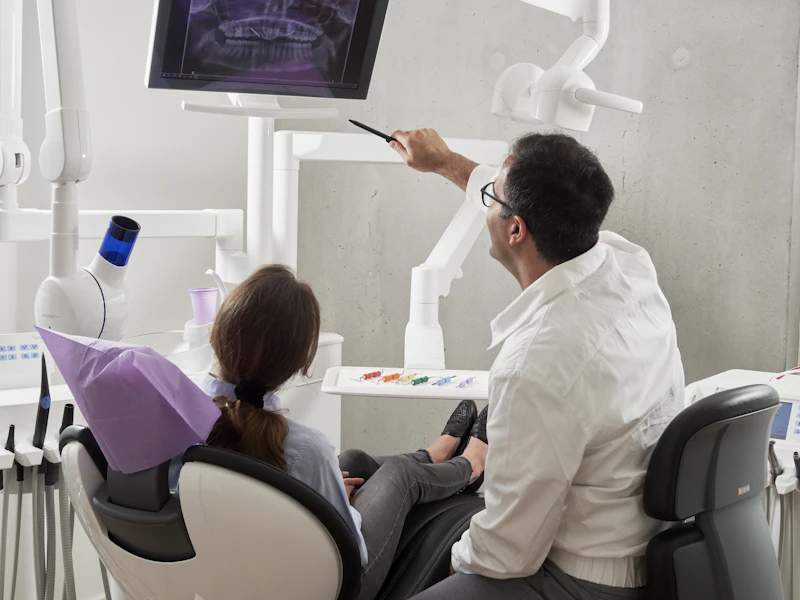
Root Canal Treatment
Root canal treatment can help preserve a natural tooth affected by deep decay, infection or dental trauma.
Understanding Root Canal Treatment
Root canal treatment, also known as endodontic treatment, involves removing infected or inflamed pulp tissue from inside a tooth, cleaning and shaping the root canals, and sealing them to help prevent reinfection.
At PRAV Dental, treatment begins with a careful clinical assessment and diagnostic imaging. Not every toothache requires a root canal; your dentist will assess the cause of your symptoms and explain appropriate options.
The Process at PRAV Dental
After examination and digital RVG imaging where appropriate, the tooth is anaesthetised. The infected or inflamed pulp is removed, the canals are cleaned, shaped and disinfected, and then filled with a suitable biocompatible material. A suitable permanent restoration, often a crown, is planned to protect the treated tooth and restore its function.
What We Offer
When Might You Need Root Canal Treatment?
- Persistent or spontaneous toothache
- Prolonged sensitivity to hot or cold
- Pain while chewing or biting
- Swelling or tenderness around the gums
- Deep dental decay or discolouration of a tooth
- Dental infection, an abscess or tooth damage following an injury
Patient Benefits
- Experienced clinical care led by Dr. Deepak Pathak
- Digital RVG imaging to support diagnosis
- Advanced dental laser technology available as an adjunct in selected cases
- Established sterilisation protocols and patient-focused treatment planning
- Emphasis on preserving natural teeth, with specialist consultation when required
Who This May Suit
The Treatment Process
Examination & Diagnosis
Clinical examination and digital RVG imaging to assess the tooth and surrounding structures.
Local Anaesthesia
The tooth is anaesthetised to help ensure a comfortable treatment experience.
Canal Cleaning & Shaping
Infected or inflamed pulp tissue is removed, and the root canal system is cleaned and shaped.
Disinfection & Sealing
The canals are disinfected and filled with a suitable biocompatible material.
Final Restoration
A permanent restoration, often a dental crown, is planned to protect the treated tooth and restore function.
Laser-Assisted Root Canal Treatment
Laser technology may be used as an adjunct to conventional root canal procedures to support disinfection of the root canal system. Depending on the clinical case and laser protocol, it may provide additional microbial reduction and supportive disinfection.
- Additional microbial reduction
- Supportive root canal disinfection
- Technology-assisted care integrated with conventional cleaning and irrigation protocols
Laser-assisted treatment does not replace conventional root canal cleaning, irrigation and sealing. Your treating dentist will determine its suitability based on your individual clinical needs.
Frequently Asked Questions
Have more questions? Our team is happy to walk you through everything before you commit.
Ask Us DirectlyRoot canal treatment is performed under local anaesthesia, and most patients tolerate the procedure well. Some temporary tenderness may occur after treatment.
Many root canal treatments can be completed in one or two visits, depending on the tooth, infection and clinical complexity.
Laser technology may provide additional disinfection benefits in selected cases. Conventional cleaning, irrigation and proper sealing remain essential for successful root canal treatment.
Many root-canal-treated teeth, particularly premolars and molars, benefit from a crown to protect them against fracture. The final restoration depends on the amount of remaining tooth structure.
With appropriate restoration, good oral hygiene and regular dental check-ups, a root-canal-treated tooth can function for many years.